

2 August 2026 • Trinity 9 • 1 Corinthians 10:6–13; Luke 16:1–9
“Therefore let him who thinks he stands take heed lest he fall” (1 Corinthians 10:12).
In the holy name of Jesus. AMEN.
Look at where Jesus puts this parable. Luke says, and this was smoothed out as I read it, “He also said to His disciples.” That word also is meant to point us backward, at the chapter you heard recently. I usually read forward, to see what comes after. I don’t always go backward, but Luke would have us do it here.
That would be Luke 15. A woman tearing her house apart over one lost coin. A father hiking up his robe and running down the road to a boy who blew every dime of the inheritance, then handing him the ring and the fatted calf on top of it.
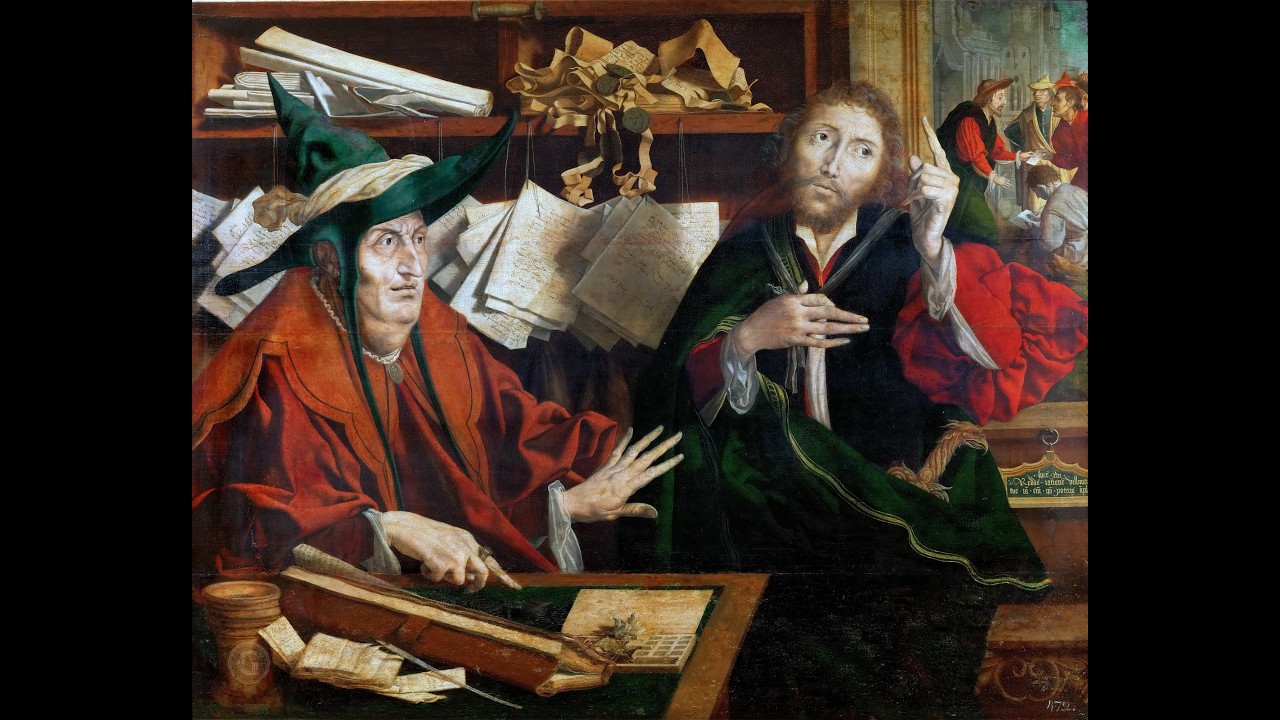
That’s where we left off. Now comes Luke 16, and the next thing out of Jesus’ mouth is a man who wasted his master’s goods and got called into the office. “Give an account of your stewardship, for you can no longer be steward” (Luke 16:2).
Why would Jesus chase the sweetest sermon He ever preached, the parables of the lost, with that one?
I think Johann Gerhard figured it out in his postil for today. Christ had just finished preaching how the Father hunts us down like lost coins and lost sheep and lost sons, and throws a party when He finds us. “However,” Gerhard writes, “Christ knows how easily we misuse this teaching for carnal security.”
Carnal security. That’s the old word for taking the sweetest thing God ever said to you and turning it into an excuse, a permission slip.
Who is better at that than us? We are the ones with the Gospel. We can rattle it off in our sleep. Saved by grace alone. Works add nothing. God justifies the ungodly. Every word of it true — that is the Gospel — and the old Adam sits right there in the pew, hears the whole thing, nods along, and reaches a conclusion the Gospel never reached: then it doesn’t matter what I do.
So the grudge stays put. You’ve hauled it around three years, and you quit calling it sin a while back. These days you call it being realistic about that person. That other sin, the one you figured God has finally made His peace with, stays too. And the Word? You know it all already. Been hearing it since you were an infant, or four, or twenty. Nothing in it for you this week, so you might as well sleep in.
How about it, then? When did that sin last bother you? When did you last drag it up here to confession instead of trying to manage it by your own resources? Are you still fighting the thing, or did you sign a truce with it years ago?
You’re baptized. You commune. You’re sitting here this morning. And underneath all of it, maybe you have decided you’re safe no matter what you do. Paul has met that man before, and he answers him with a desert full of graves.
“Our fathers,” Paul calls them. He means Israel. In the verses just before our reading, he runs down what they had. Every one of them under the cloud. Every one through the sea. Every one baptized into Moses. All of them eating the same spiritual food and drinking the same spiritual drink, “for they drank of that spiritual Rock that followed them, and that Rock was Christ” (1 Corinthians 10:4).
Catch that. Sound familiar? They were baptized. They ate. They drank. And what they drank from was Christ Himself. In other words, they were Christians.
They were God’s people, with the same faith in Christ that we have and the same sacraments. Indeed, far more graces and gifts of God than we have. Six hundred thousand men walked out of Egypt on dry ground, with the sea standing up on both sides. That is what they got.
Two of them reached the Promised Land. Joshua and Caleb. Everyone else is buried in that desert.
So what got them? Not a shortage of grace and mercy, that much is certain. We can count five sins straight out of the Psalms Paul quotes today. They craved what God hadn’t given them. They built a calf and bowed to it. They chased after Baal Peor. They tested God at the water. And they stood in their tents and sat complaining.
Look hard at that list. Just five. They wanted things. They complained. Small sins, respectable sins, the sort that never make it into anybody’s confession, and that whole nation was buried in the sand.
“Now all these things happened to them as examples, and they were written for our admonition, upon whom the ends of the ages have come” (1 Corinthians 10:11). Paul says the story of them was written down for you.
Then the point: “let him who thinks he stands take heed lest he fall.” Who is that aimed at? Not the fellow who has never darkened the door. It goes straight at the man who thinks he has standing. The baptized one. The one who communes. The member of forty years who could walk you blindfolded to any hymnal in this building.
Our own Confession says it outright. The Augsburg Confession condemns those “who deny that those who have once been justified can lose the Holy Spirit.” No nervous preacher cooked that up to frighten you. Our church confessed it in 1530, because Paul wrote it, and because we have a whole wilderness full of graves to prove it.
You can fall. That is the Law, and I won’t hide it from you. So is that where Paul leaves you? Read his next sentence again.
“No temptation has overtaken you except such as is common to man; but God is faithful, who will not allow you to be tempted beyond what you are able, but with the temptation will also make the way of escape, that you may be able to bear it” (1 Corinthians 10:13). Our memory verse for the week.
God is faithful. That is where the weight of it all sits now. Off you, and onto Him. Paul never tells you that you are strong enough of your own. He tells you that God is faithful, and that faithfulness has held in a wilderness and everywhere since.
Israel drank from that Rock and fell anyway. You are not tougher than they were in your spiritual walk, so don’t kid yourself. The Rock hasn’t gotten any weaker. He has not dried up, He has not wandered off, and He is not stuck back in somebody else’s history. The Rock is here for you, in this room.
That is the one thing the steward got right, and the only thing about him worth copying. He believed the day of accounting was coming, and he moved while he still had time. “Take your bill, and sit down quickly and write fifty” (Luke 16:6). Quickly, Jesus says. Not next quarter, once he had tidied up his affairs. He knew, rightly, that the reckoning was coming. The door stood open, and the man walked right through it.
The door still stands open today. The way of escape God promises has an address, and you came to it today. You are sitting in it.
Now, if you are sitting there knowing you did not merely drift, but that you truly are falling, that you have already fallen — hear also what your church confesses in that same article, one sentence ahead of the condemnation. “There is forgiveness of sins for those who have fallen after Baptism whenever they are converted. The Church ought to impart Absolution to those who return to repentance.” And Augsburg turns around and condemns the Novatians too, those men who would not absolve the fallen even after they came back. There is forgiveness.
Catch what that means for you. The same Confession that tells you the fall is real and possible also tells you the door behind you was never bolted shut. It always stands open.
So come up here to the rail today. The Rock that watered Israel in the desert now puts His own body and blood into your mouth for the forgiveness of your sins. He knows what you did. He knows how long you have been sitting on it. He was faithful to you the whole time you were not, and He is faithful even this morning.
Give an account of your stewardship. It’s probably not a very good one. But then listen to the account He gives of you: forgiven in Christ, received back to the Father with joy.
Thanks be to Jesus, in His + Name. AMEN.
Rev. Christopher R. Gillespie
St. John Ev. Lutheran Church & School — Sherman Center
Random Lake, Wisconsin