
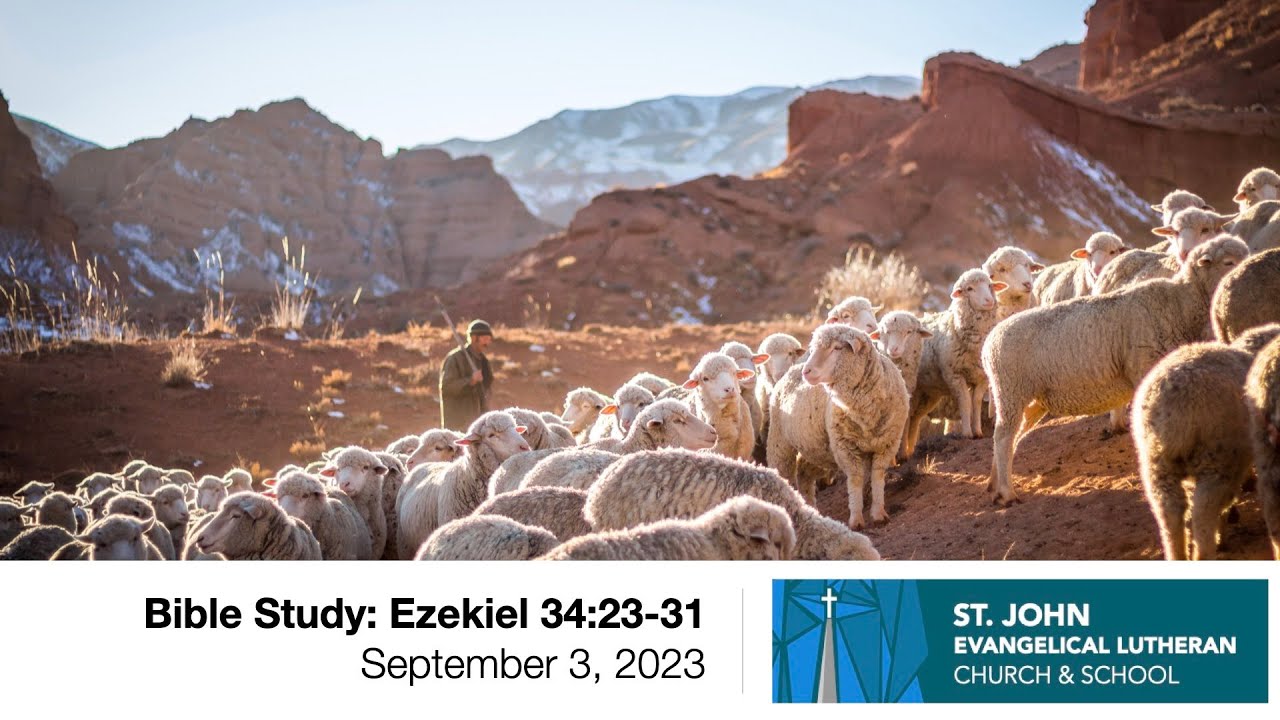
Yahweh Will Save His Sheep through His Messianic Shepherd – Chapter 34 is probably one of the more familiar chapters in Ezekiel because of the Good Shepherd theme (v.11-34). It is naturally paralleled with Psalm 23 and John 10:7-18. There is a connection between this theme and Mt. 25:32-46. The Shepherd language also governs Lk 15:3-7, Jude 12, and Rev 7:17. 34:11-16 is the traditional OT for Misericordias Domini, the Second Sunday after Easter (also Proper 29A and Proper 19C for the Revised Common Lectionary in LSB). The metaphor of the shepherd is widespread in the ancient Near East. The picture of the gods as shepherds appears in Mesopotamian (Sumerian) and Egyptian literature. In Homer, Agamemnon, the leader of the Greeks against Troy, is called the “shepherd of the people” (Illiad, 2.243; Odyssey, 3.156). Yahweh Himself is often called or described as Israel’s Shepherd (Ps 23:1; Is 40:11; Micah 7:14; Ps 80:1). And the verb “to shepherd” often refers to Yahweh’s appointed ruler (Moses in Is 63:11; David in Ps 78:70-72; the pagan Persian king Cyrus in Is 44:28). Biblical usage sometimes expands to include the entire ruling class (Zech 10–11; Jer 23:1-6).
The Messianic Shepherd, “My Servant David” (34:23-24) – Almost all OT Christology is packed in these two verses. “I will raise up” is a common expression for the establishment of some person in a position, e.g., the prophet like Moses (Deut 18:15,18), prophets (Amos 2:11), priests (1 Sam 2:35), and kings (1 Ki 14:14; Jer 30:9). “One Shepherd” indicates the unity and consistency necessary fir a united and faithful people. The one church spanning both Testaments consists of all believers in Christ, both Jews and Gentiles (Gal 3:26-2; 6:16; Eph 2). All under the one Shepherd are part of God’s one flock. “My Servant David” are standing titles of King David