
The Fall of Pharaoh (32:1–16) – Jerusalem had fallen in the summer of 586. It took the survivor about six months to bring new to Ezekiel and the other exiles in Babylon in January 585 (33:21). About two months later, in March 585, came Ezekiel’s last two oracles against Egypt. Both contain reprises and elaborations of earlier oracles. Pharaoh claimed near divinity. Lions are connected to the sun god, Ra, the war god, and lion-headed Sekhmet. But Yahweh executing true judgment is compared to a ravening lion (Is 31:4; 38:13; Hos 5:14; 11:10-11; 13:7; Amos 3:8). Jesus as savior is portrayed as the conquering “lion from the tribe of Judah” (Rev. 5:5; Gen 49:10; Ezek 21:27). In Yahweh’s eyes, Pharaoh’s claims are comic, instead showing him as a defeated sea monster or a repugnant crocodile. Yahweh brings judgment with the net of many nations (v.3). Pharaoh is also depicted as a “world beast” (v.5), like the dragon in Rev 12 and the beast from the sea in Rev 13. Then the language turns grotesque, eschatological, and even apocalyptic (v.6-8). Like the king of Babylon (Is 13:10; 14:12), Pharaoh is compared to a bright star, again an antitype of the fall of Satan. The overthrow of the world power of Pharaoh is an omen and prelude to the overthrow of every ungodly world power on the day of the last judgment. Note also the return to chaos, as in chapter 31.
Then the figurative language of v.2-8 shifts to literal terms: the immanent Babylonian devastation of Egypt as Yahweh’s sword. The king does not come alone but with all his ruthless allies (v.9-12). Pharaoh is judged for challenging and obscuring the clear streams of God’s grace and promise. Throughout both OT and NT and in Christian usage and symbolism, oil describes the life-giving power of the Spirit and the blessings of Christ’s Word. Yahweh’s purpose in judgment is to move people to repentance, but if they do not repent, at least they will welcome His lordship (Phil 2:10-11). The NT declares that through the church age, Satan will intensify his attacks against the church, culminating in a final assault (Rev 20:7-10), but at the return of Christ, all opponents of God’s kingdom will be vanquished forever (Rev 20:10-15).
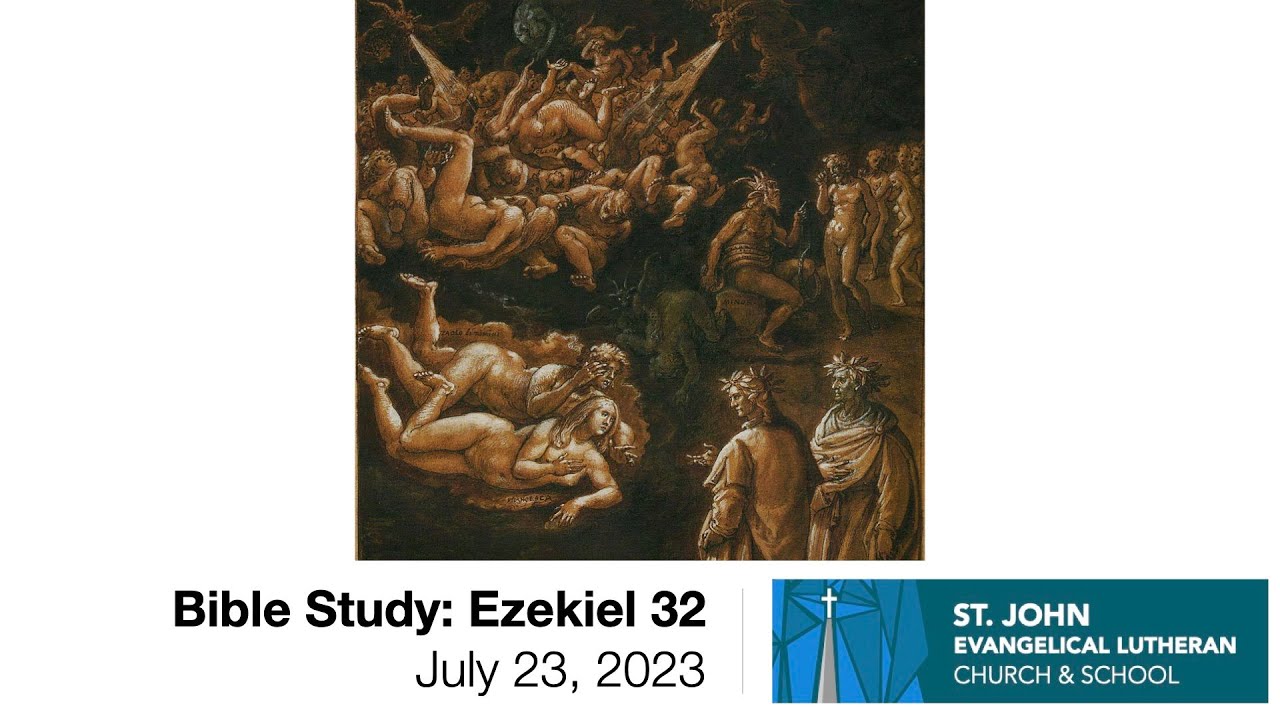
Pharaoh Descends into Sheol (v. 17–32) – The last in the collection of Ezekiel’s Gentile oracles is a sequel and conclusion to the preceding one. Alongside Isaiah 14, this is one of the OT’s most detailed depictions of the nether region. It also shows the power of the prophetic word, which does not only proclaim or predict but brings reality to pass. It is the efficacious Word of Yahweh, which always accomplishes what it says (Is 55:10-11). The prophet makes Egypt go down to the underworld, including the professional mourning women of 32:16. God is described as working mediately, not only through “called and ordained” prophets but through other agents who have no idea whom they are really serving.
The prophet’s speech (v….