
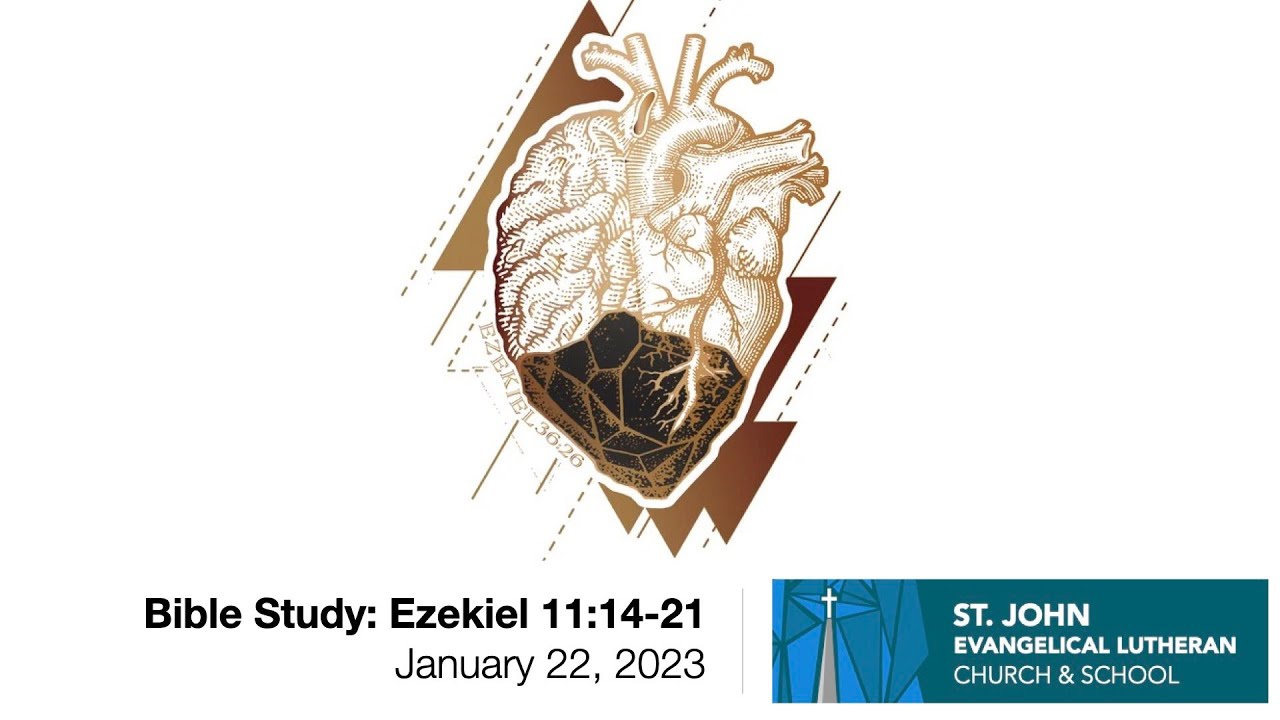
Ezekiel – 11:14-21
“The Gospel According to Ezekiel” – This section summarizes the Gospel through a Christological lens. God works sub contrario, that is, in a form contrary to what human reason expects. Here the issue is where the remnant—the true Israel, consisting of the legitimate heirs of God’s promises—is to be found. Like Jeremiah, Ezekiel insists that God’s future lay with those who “died” to their past and would be miraculously resurrected by God. The climax of this death-resurrection pattern comes on Good Friday-Easter Sunday. We are initiated into Christ’s death and resurrection in the Sacrament of Holy Baptism (e.g., Rom 6:1-4; Col 2:11-13) and are maintained in Him through the application of Law and Gospel in His Word and the Sacrament of the Altar. Daily we die to sin and rise to new life in Christ. At temporal death, our sinful nature dies for good, and on the Last Day, when Christ returns to bring this world to its end, our bodies shall be raised incorruptible, and we as whole persons shall inherit eternal life in the new heaven and new earth. These verses are Yahweh’s response to Ezekiel’s outcry in 11:13, where he declared that God had begun to exterminate Israel in its entirety. Earlier in 9:8, when Ezekiel had posed the same thought as in 11:13 but phrased (more hopefully) as a question, God’s answer had accented the negative (9:9-10). Now, after Ezekiel’s outcry in 11:13, phrased as a despairing statement, Yahweh proclaims emphatic Gospel. God’s Law rightly drives the hearers to despair of their own merit and abandon hope of evading judgment. But when the penitent cast themselves upon God’s mercy alone, they hear his Gospel pardon and promise of new life. After Jerusalem’s fall, recorded in chapter 33, the Gospel message will predominate in Ezekiel. However, here he still faces an audience that does not believe that such a thing will ever happen. Yet the inclusion of this section’s description of what God will do after the judgment comes would reinforce to the exiles that the future judgment is a foregone conclusion. This issue is not unique to Ezekiel; it is part of the “alteration of weal and woe,” the pattern of Law and Gospel commonly found in all the prophets and intimated already in the Pentateuch (e.g., Leviticus 26 and Deuteronomy 30). We saw it earlier in Ezekiel (5:1-3; 6:1-9) and will see…